Why Brick Mailboxes, Steps, and Retaining Walls Fail After Atlanta Cold Snaps
Atlanta homeowners often assume serious masonry damage only happens in places with harsh winters. The truth? Short cold snaps in Georgia can be just as destructive — especially to brick mailboxes, front steps, and retaining walls.
If your property went through freezing nights followed by daytime temperatures in the 40s, you may already have damage forming — even if it isn’t obvious yet. Many masonry failures don’t happen during the cold snap, but days or weeks later, once moisture expands, contracts, and weak points finally give way.
This guide explains why these failures happen in Atlanta, what homeowners often miss, and exactly when to call a professional mason before small problems turn into expensive rebuilds.
Why Atlanta Masonry Is Vulnerable to Cold Snaps
Georgia’s masonry structures are built for mild winters, not extended freeze-thaw cycles. When temperatures drop below freezing overnight and rise during the day, moisture trapped inside brick, mortar, and soil repeatedly expands and contracts.
This creates:
- Internal cracking
- Mortar joint separation
- Soil movement behind walls
- Gradual loosening of brick structures
Because Atlanta homes often experience brief freezes, many structures were never designed with deep frost protection — making them especially vulnerable after cold snaps.
Freeze-Thaw Cycles: The Hidden Enemy of Brickwork
Here’s what happens during a typical Atlanta cold snap:
- Rain or melting frost soaks into brick, mortar, and soil
- Overnight temperatures drop below freezing
- Trapped moisture expands by up to 9%
- Daytime temps rise, causing partial thawing
- The cycle repeats
Over several days, this process:
- Widens hairline cracks
- Pushes bricks outward
- Weakens mortar bonds
- Shifts soil pressure behind retaining walls
By the time homeowners notice visible damage, the structural integrity may already be compromised.
Why Brick Mailboxes Fail After Cold Weather
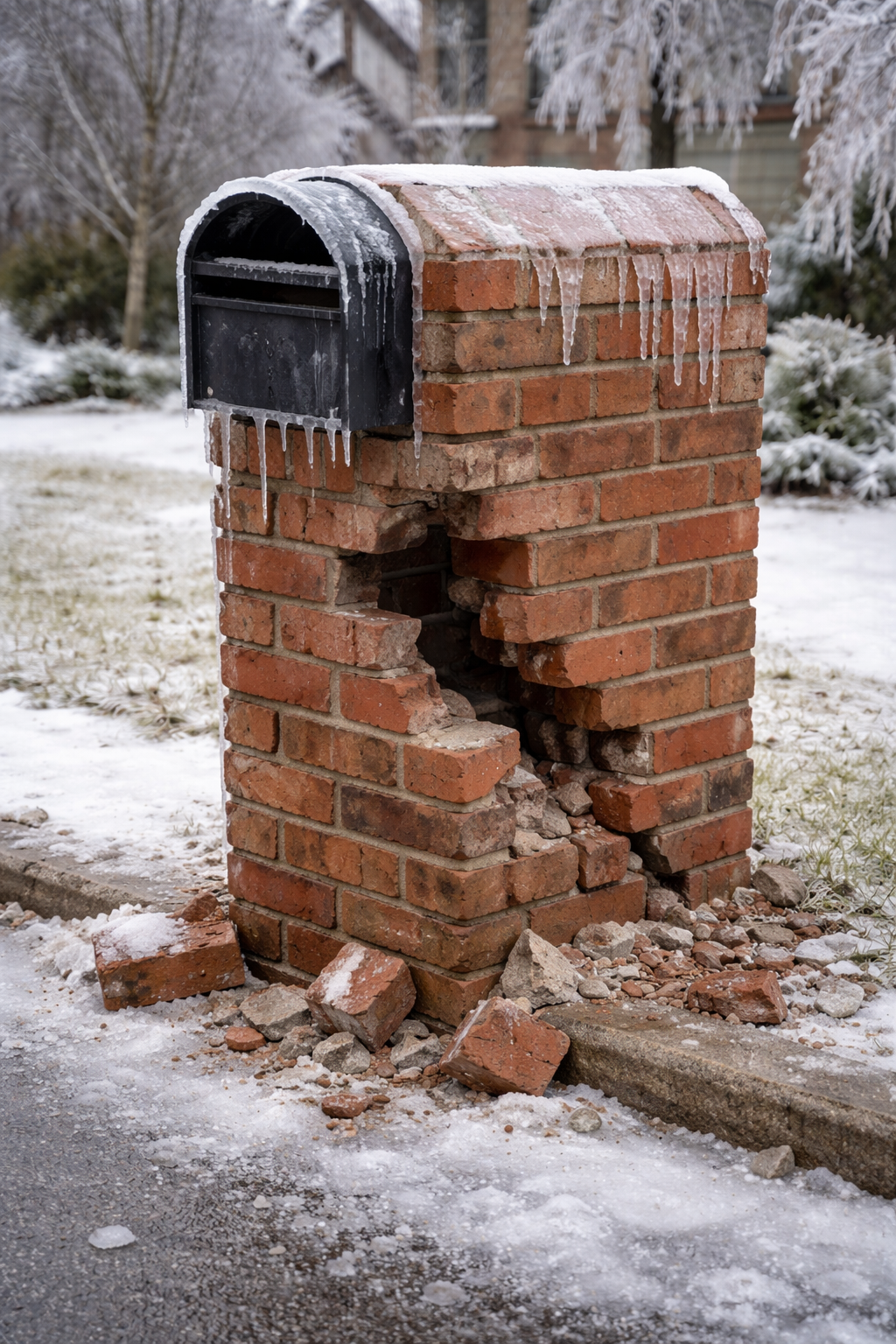
Brick mailboxes are one of the most common masonry failures after Atlanta cold snaps.
Common causes include:
- Shallow foundations
- Water pooling at the base
- Aging mortar joints
- Vehicle vibration combined with freeze expansion
Warning signs homeowners miss:
- Slight leaning
- Cracks at the base
- Loose bricks that “wiggle”
- Gaps where mortar is pulling away
Many mailboxes collapse days or weeks after freezing temperatures, not immediately. If your mailbox looks even slightly off-center, it’s worth having it inspected before it falls — often damaging the mailbox insert or surrounding brickwork.
Why Brick Steps Crack and Shift After Cold Snaps
Front steps and stoops take a beating during Atlanta winters because they’re exposed on multiple sides.
Freeze-related step damage often comes from:
- Water pooling near risers
- Inadequate drainage beneath steps
- Mortar joints absorbing moisture
- Soil expansion under the slab or footing
Signs of step failure include:
- Cracks along the side or top
- Separating steps
- Loose or rocking bricks
- Uneven step height (trip hazards)
This damage is not cosmetic. Shifting steps can become a safety issue — and in many cases, minor early repairs can prevent a full rebuild.
Why Retaining Walls Are Especially at Risk
Retaining walls are under constant pressure, and cold snaps increase that pressure dramatically.
When soil behind a wall freezes:
- It expands outward
- Drainage systems clog or freeze
- Hydrostatic pressure builds rapidly
Even a short freeze can cause:
- Wall bulging
- Horizontal cracking
- Brick separation
- Partial collapse
Atlanta-specific risk factors:
- Older walls without modern drainage
- Clay-heavy soils common in metro areas
- Landscape grading that directs water toward the wall
If your retaining wall looks slightly bowed or cracked after a cold snap, it’s often a sign the structure is struggling to hold back pressure.
Hidden Masonry Damage Homeowners Often Miss
Some of the most costly masonry problems start invisibly.
After cold snaps, homeowners often overlook:
- Hairline mortar cracks
- Brick faces beginning to flake (spalling)
- Slight separation at corners
- New gaps around steps or columns
These small changes allow even more water intrusion, accelerating damage during future cold nights and rain events.
When to Call a Mason After an Atlanta Cold Snap
You should contact a professional mason now, not later, if you notice:
- Leaning brick mailboxes
- Cracks wider than a credit card edge
- Loose or shifting steps
- Retaining wall bulging or stair-step cracking
- Missing or crumbling mortar
- Bricks that sound hollow when tapped
Waiting often turns a repair into a rebuild.
A post-storm inspection can identify:
- Foundation movement
- Mortar failure
- Drainage issues
- Safety concerns
Why Post-Storm Masonry Inspections Matter in Atlanta
Atlanta’s climate creates damage in stages. A structure that looks “okay” today may fail after the next rain or cold night.
A professional inspection helps:
- Catch damage early
- Extend the life of existing masonry
- Prevent sudden collapses
- Save money on major reconstruction
Many homeowners are surprised to learn how affordable early repairs are compared to emergency rebuilds.
Serving Atlanta Neighborhoods & Property Types
We work with homeowners throughout Atlanta, including:
- Buckhead
- Midtown
- East Atlanta
- Virginia-Highland
- Decatur-area homes
- Historic brick properties
- Newer developments with decorative masonry
From classic brick mailboxes to engineered retaining walls, local experience matters when dealing with Atlanta’s soil and weather conditions.
Frequently Asked Questions (FAQs)
Can a cold snap really damage brick in Atlanta?
Yes. Even brief freezes can cause damage when moisture is present. Repeated freeze-thaw cycles are especially harmful.
Why did my brick mailbox fail weeks after the cold weather?
Freeze damage often weakens internal structure first. Failure happens later once the brick loses support.
Are cracks after cold weather always structural?
Not always — but some are. That’s why professional inspection is important before dismissing them as cosmetic.
Can damaged mortar be repaired without rebuilding?
In many cases, yes. Early mortar repair can stabilize the structure and prevent further damage.
Should retaining walls be inspected after winter weather?
Absolutely. Pressure buildup and drainage failures often appear after freezing temperatures.
If your brick mailbox, steps, or retaining wall looks different after Atlanta’s recent cold snap, don’t wait for it to get worse.
Call today to schedule a post-storm masonry inspection.
We help Atlanta homeowners identify hidden damage early — before small problems turn into expensive repairs.